Predicting Demand Before It Peaks — A Jewellery Retail Conversation
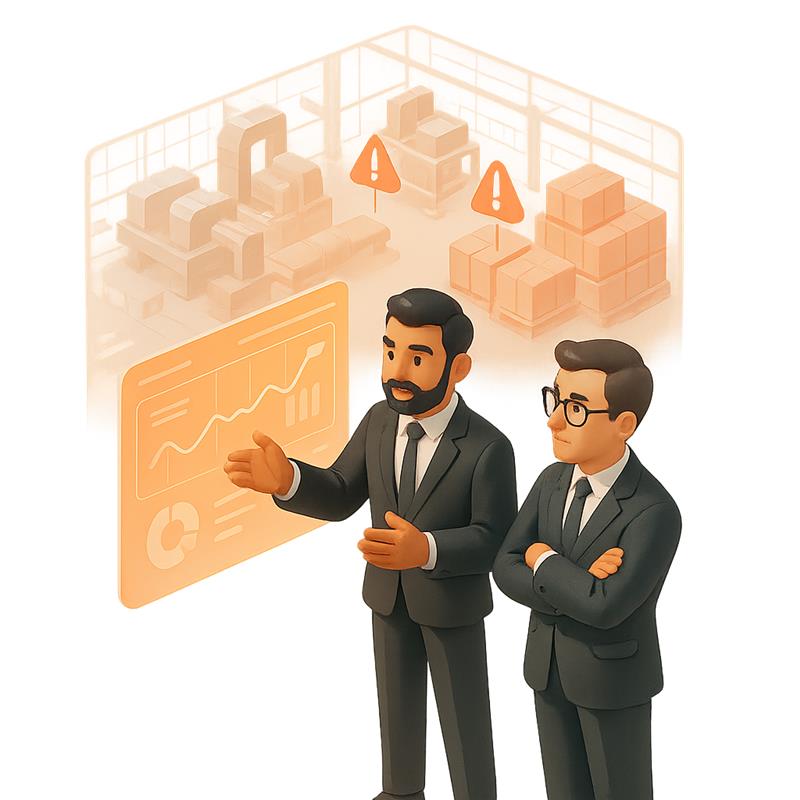
A few months ago, I was in discussion with a customer from a well-known jewellery retail brand.
He had recently taken up an expanded leadership role and was preparing for the festive quarter — a crucial period for their business.
While he was excited about his new responsibilities, he was equally frustrated about the uncertainty his team was facing. Predictions from the previous year were no longer matching today’s buying patterns, and early footfalls were already hinting at a shift.
But he shared a concern that was familiar across the industry:

"We are still relying on last year's sales and gut feel.
By the time we react, customer preferences have already shifted."

Their stores were stocked with heavy traditional gold sets, while customers were increasingly asking for light-weight, daily-wear collections and diamond pieces.
It became clear they were still planning based on last year’s trends, while this year’s demand had already moved in a different direction. The data existed — but the insights were always arriving too late, leaving the brand one step behind the customer.
The data was there — but the insights were late.
That's when we suggested a shift from retrospective analysis → predictive intelligence.
Together, we implemented an AI-driven demand forecasting model that connected:
- Past showroom + online sales behavior
- Browsing and wishlist patterns
- Gold price fluctuations
- Festive buying windows
- Social media and trend signals
Once the system was live, the patterns became clear.
Lightweight daily-wear demand peaks two weeks before major festivals.
Personalized small-detail designs were moving faster than heavy sets.
This insight changed everything.

Together, we implemented an AI-driven demand forecasting model that connected:
- Past showroom + online sales behavior
- Browsing and wishlist patterns
- Gold price fluctuations
- Festive buying windows
- Social media and trend signals
Once the system was live, the patterns became clear.
Lightweight daily-wear demand peaks two weeks before major festivals.
Personalized small-detail designs were moving faster than heavy sets.
This insight changed everything.

Turning predictions in to business gains
The leadership team aligned production, stock planning, and marketing strategies to match the forecast — not the past trend.
Within a short time:
- Unsold inventory reduced by ~ 20%
- Forecasting accuracy improved by ~ 30%
- Fast-moving designs sold out at the right moment
- Campaigns matched real customer intent
For the first time, the brand wasn't reacting to customer demand — they were ahead of it.
This is what AI should do — not just analyze what was but help you act on what will be.
Turning predictions in to business gains
The leadership team aligned production, stock planning, and marketing strategies to match the forecast — not the past trend.
Within a short time:
- Unsold inventory reduced by ~20%
- Forecasting accuracy improved by ~30%
- Fast-moving designs sold out at the right moment
- Campaigns matched real customer intent
For the first time, the brand wasn't reacting to customer demand — they were ahead of it.
This is what AI should do — not just analyze what was but help you act on what will be.
Frequently Asked Questions

About the Author
Navith
Media Intelligence & Vision Analytics
Driving customer growth through intelligent, data-driven CRM automation.